
A reporter needs a named source who can speak to a specific question, on the record, usually before the end of the day. A brand has exactly that person on staff and no way to get them in front of the right journalist in time. White Label Experts closes that gap in both directions: we place subject matter experts with the reporters writing about their field, and we give journalists a vetted human being to quote instead of a press office.
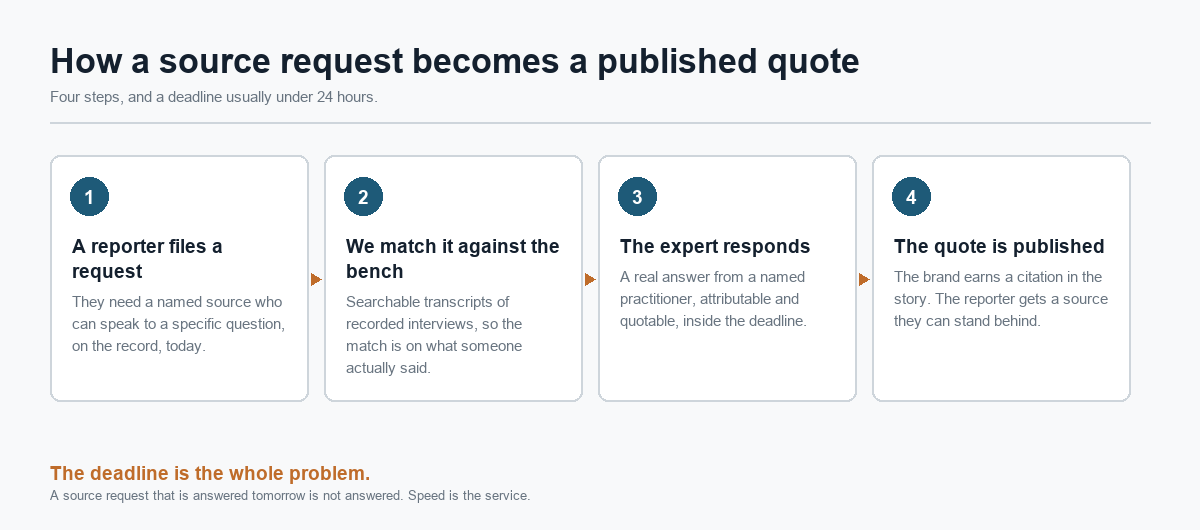
For brands: your expert is the asset, not your press release
Most companies have someone who genuinely knows the subject. A founder who has run the thing for eleven years, an operations lead who can explain why the standard advice fails, a technician who has seen the failure mode a hundred times. That person is the most credible marketing asset the business owns, and they almost never get used, because nobody inside the company is watching the requests that reporters file every day.
We identify which of your people can actually carry a question, position them so a journalist can tell at a glance why they are worth quoting, and put them in front of reporters covering that beat. What you get back is not a mention in a roundup nobody reads. It is your named expert, quoted in a story their buyers already trust, with the brand attached to the answer.
Earned coverage behaves differently from advertising. It keeps working after the campaign stops, it gets cited by other writers, and increasingly it is the material that AI answer engines draw on when somebody asks a question in your category. A quote in a real publication is one of the few marketing assets that appreciates.
For journalists: a real source, inside your deadline
You already know the problem. You need a practitioner who can speak to something specific, you have a few hours, and the options are a PR list that returns a corporate statement, a source database full of people who signed up to be quoted about anything, or your own contacts who are busy.
We send you a named person who works in the field, with a track record you can check, who has agreed in advance to be contacted. No fee, no exclusivity, no obligation to use the quote. If they are not right for the piece, say so and we will stop sending.
What we mean when we say vetted
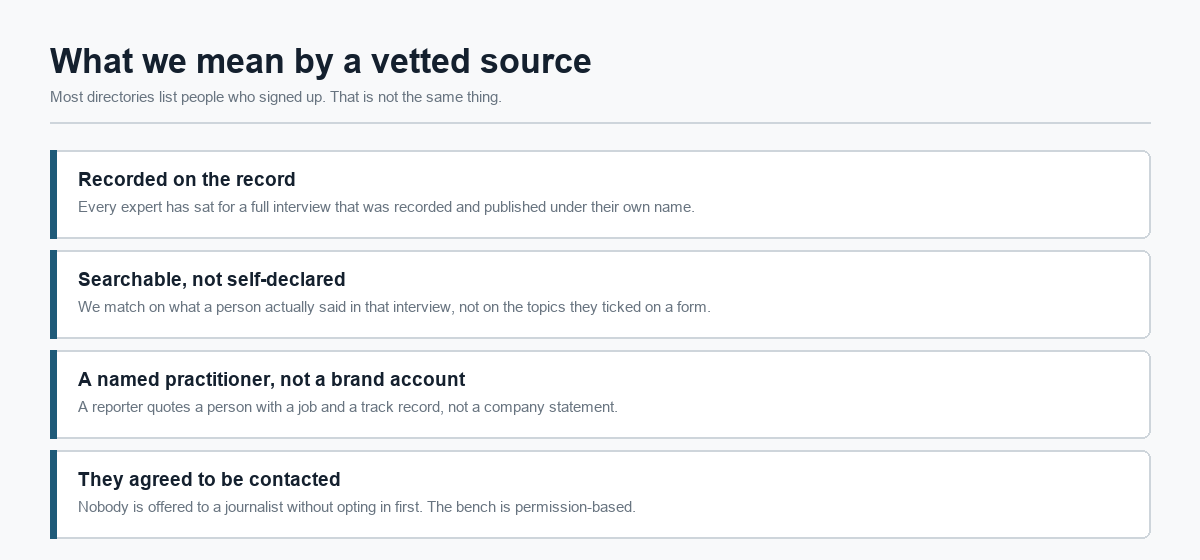
Every source database claims its experts are vetted. Usually that means somebody filled in a profile and ticked some topic boxes. Ours means something narrower and more useful: the expert has sat for a full recorded interview, published under their own name, and we can search what they actually said.
That difference matters on deadline. Matching a reporter to a source on self-declared topics gets you somebody who claims to know about the subject. Matching on a transcript gets you somebody who has already explained it out loud, at length, in a way you can read before you make the introduction. We know how they think about the question before we send them to you.
It also means nobody is on the list by accident. Experts opt in before they are offered to anybody, which is why journalists get a reply rather than silence.
Why sourcing got harder, and stayed harder
For fifteen years, Help a Reporter Out was the default. Reporters posted queries, sources answered, and everyone worked from the same place. That ended in December 2024 when Cision shut down Connectively and the original service closed. Featured acquired the HARO assets in April 2025 and relaunched the name as a free email digest, so mail arriving from the old address today is a different product than the one people remember.
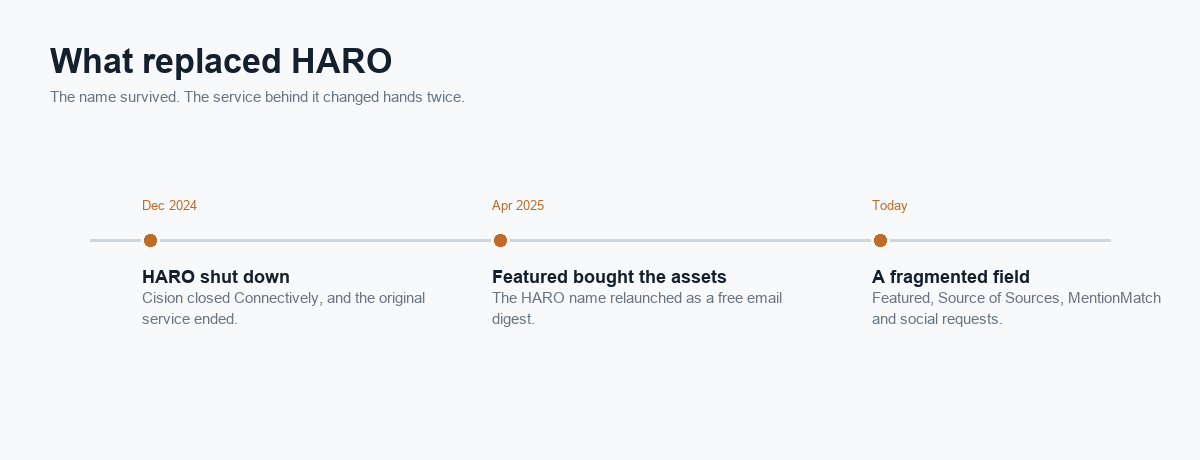
What replaced it is not one thing. Requests are now spread across Featured, Source of Sources, MentionMatch, and hashtag requests on social platforms, each with its own rhythm and its own deadline. A brand that wants to be quoted has to watch all of them, every day, and answer within hours. That is a full-time job nobody has, which is the job we do.
Where to go next
- How it works — the process end to end, for brands and for journalists.
- Case studies — placements, and what they were worth.
- About us — who runs this and why.
- The blog — what is changing in source requests and earned media.
Get connected
If you are a brand and you have an expert worth quoting, tell us who they are and what they know. We will tell you honestly whether reporters are asking about it.
If you are a journalist, tell us what you are writing and when you need it. No account, no fee.